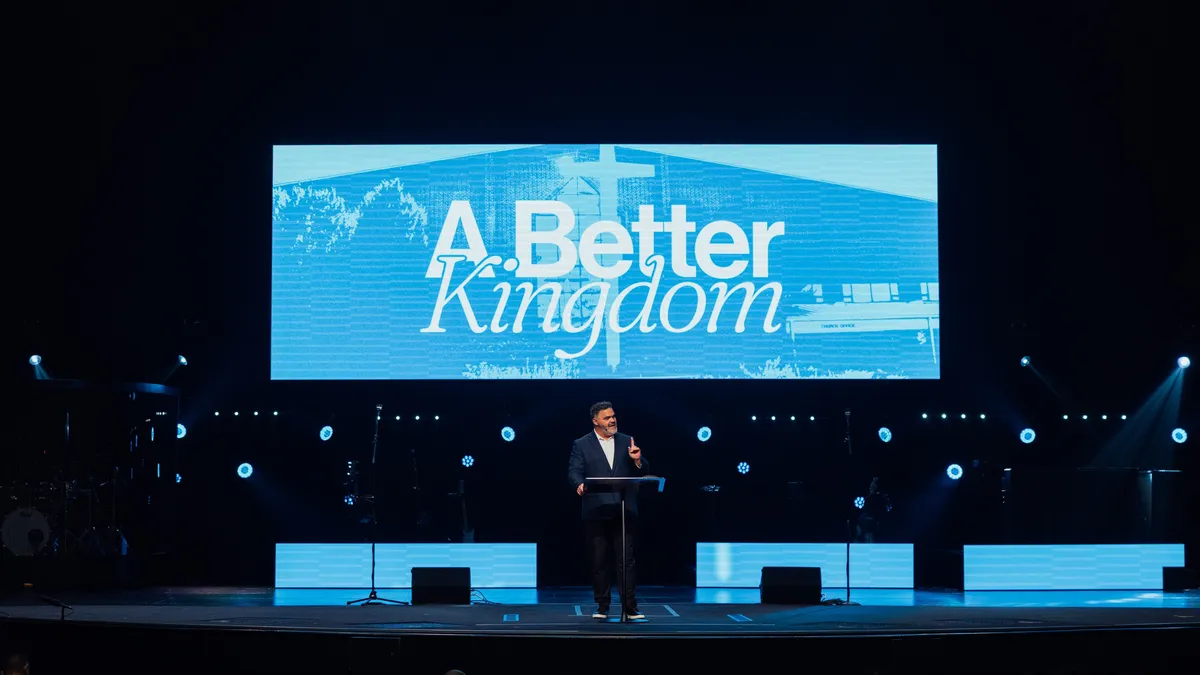
Kingdom People, Not Culture People: The Character Jesus Describes in Matthew 5
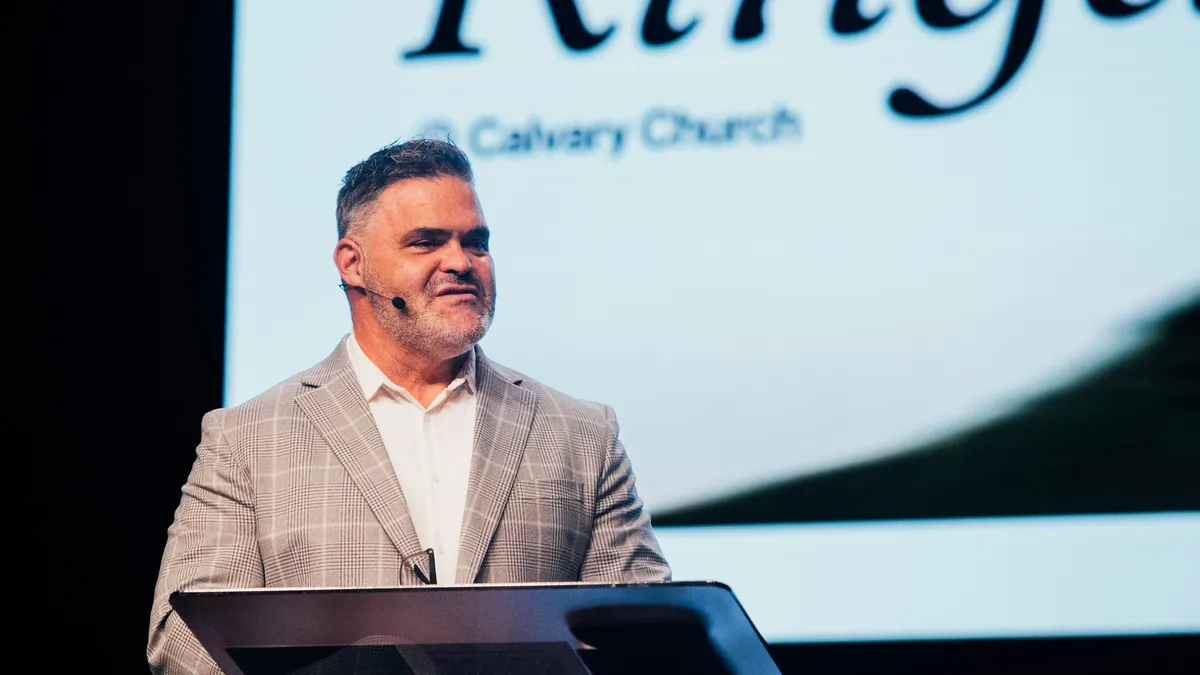
The Character of Kingdom People
August 2, 2026 | Pastor Marty Sloan
More from KingdomWatch the full livestream on YouTubeSubscribe on YouTube
When the news is heavy and the world feels out of control, what should a follower of Jesus do? Scripture turns the question around. Instead of asking how to fix everyone else, it asks what kind of person you ought to be (2 Peter 3:11). In the Sermon on the Mount, Jesus answers with a picture of kingdom people: a right posture, a clear purpose, a changed heart, and a life lived for God's glory.
Key takeaways
- The challenge for every believer is to think like kingdom people and not like culture people.
- When everything around you is shaking, 2 Peter 3:11 asks what kind of person you ought to be, and Matthew 5 answers with the humble, merciful, peacemaking posture of the Beatitudes.
- Every believer is a kingdom citizen first and is on a kingdom assignment as salt and light wherever they live, work, or study.
- Jesus looks past actions to the intentions of the heart, and He calls kingdom people to give, pray, and fast for God's glory instead of human applause.
What does it mean to think like a kingdom person?
Thinking like a kingdom person means you see your life through God's rule before you see it through the culture's camps. Pastor Marty Sloan put it plainly: "The challenge for every believer is to think like kingdom people and not cultural people."
By nature, most of us have an earthly mindset. When you see problems in the culture, you think in terms of human effort: who is right, who is wrong, and how to change it. Scripture keeps pulling you into a different camp, where Jesus is King.
The kingdom of God is the place where Jesus reigns, where His will is done, and where joy, peace, security, and hope are found in His presence. Psalm 16:11 says, "You will fill me with joy in your presence, with eternal pleasures at your right hand."
What kind of person should you be when the world is shaking?
You should be holy and godly, with your eyes on the day of the Lord. In Matthew 24, Jesus was honest about wars, famines, and persecution, and He still pointed to the hope of His kingdom. Peter does the same, then asks a personal question.
Since everything will be destroyed in this way, what kind of people ought you to be? You ought to live holy and godly lives as you look forward to the day of God and speed its coming.
2 Peter 3:11 to 12
When things fall apart, the culture tells you to go fix everyone else. The Bible tells you to ask how you need to be different on the inside. For a believer, even death holds no fear, because it is a doorway into the presence of God.
Why does double-mindedness steal your peace?
If you try to think like the culture while living in the kingdom, you build conflict into your own soul. A double-minded person is unstable in all they do (James 1:8).
Calvary is a church of more than 70 nations, yet everyone in the room shares one citizenship first. A kingdom citizen is a believer whose first allegiance belongs to Jesus, before any earthly nation. "I'm an American citizen," Pastor Marty said, "but before I am that, I'm a citizen of the kingdom of God."
What posture does Jesus describe in the Beatitudes?
The kingdom begins with the right posture. Jesus begins with a right posture toward God, toward each other, and toward His kingdom. The Beatitudes are the blessings Jesus speaks at the start of the Sermon on the Mount, and they describe the attitude of a kingdom person. The crowd may have expected a plan to overthrow Rome. They heard this instead:
Blessed are the poor in spirit, for theirs is the kingdom of heaven. Blessed are those who mourn, for they will be comforted. Blessed are the meek, for they will inherit the earth. Blessed are those who hunger and thirst for righteousness, for they will be filled. Blessed are the merciful, for they will be shown mercy. Blessed are the pure in heart, for they will see God. Blessed are the peacemakers, for they will be called children of God.
Matthew 5:3 to 9
Notice the order: Jesus describes who His people are before He tells them what to do. Pastor Marty put it this way: "Once I become, now I do." You become a new person through faith in Jesus Christ, and then you go to work. At Calvary we often say God works in us before He works through us.
Every line of the Beatitudes runs against human nature. When a car flies past you on the interstate, you ask where the police are; when you speed, you pray there are none. Kingdom people reverse that and give others the benefit of the doubt. Your first response becomes "I want to hear more about that" instead of "What did you just say?"
What is your purpose as salt and light?
The kingdom grows as you live out your purpose in the world. Your purpose is to show the world God's kingdom wherever you are. Jesus told ordinary listeners, "You are the salt of the earth" and "You are the light of the world" (Matthew 5:13 to 14).
Every believer is on a kingdom assignment in everyday places such as work, school, home, and the checkout line. Where you see decay, bring the gospel like salt, and where you see darkness, shine the light of Christ. Salt preserves, and light exposes darkness. Neither exists for itself. The church was designed to influence culture.
Why does Jesus look past your actions to your heart?
Jesus looks at the heart because that is where kingdom change begins. Later in Matthew 5, He keeps repeating, "You have heard that it was said... But I tell you." Religious thinking judges people by what they do. Jesus goes deeper, to their intentions. As Pastor Marty admitted, "I can act nice and intend ill."
For example, everyone agrees you shouldn't murder. Jesus raises the bar: "anyone who is angry with a brother or sister will be subject to judgment" (Matthew 5:22). Then He makes it practical.
Therefore, if you are offering your gift at the altar and there remember that your brother or sister has something against you, leave your gift there in front of the altar. First go and be reconciled to them; then come and offer your gift.
Matthew 5:23 to 24
Jesus goes on to address lust, divorce, honesty, and loving your enemies, and each one ties back to what kind of person you should be. When everything looks messy on the outside, get right on the inside.
The kingdom is personal, and it is also public. Religion manages behavior and keeps faith private. Jesus transforms hearts, and His kingdom compels you to live your faith outwardly, like the woman at the well who ran to tell her town, "Come, see" (John 4:29).
Who gets the glory when you give and pray?
In God's kingdom, God gets the glory. In Matthew 6, Jesus addresses giving, praying, and fasting with one theme: do them for God to see.
Be careful not to practice your righteousness in front of others to be seen by them. If you do, you will have no reward from your Father in heaven.
Matthew 6:1
Jesus isn't forbidding anyone from knowing you fast or give. He is warning against doing it for human recognition. Prayer works the same way. Pastor Marty described praying while walking his two dogs, talking to God in plain words: "God, I got issues. I need You." He prays to talk with God, and he never prays so that others will hear him.
Jesus sums up the Sermon on the Mount with one access point: "seek first his kingdom and his righteousness" (Matthew 6:33). When you know who your King is, what happens outside can't rule what is inside. That is why Paul could sing in prison and David could worship while hiding in a cave.
How does the Sermon on the Mount end?
It ends with a choice. In Matthew 7, kingdom community looks different: you remove the plank from your own eye and treat others as you want to be treated. Then Jesus closes with four pictures: two gates, two roads, two trees, and two foundations (Matthew 7:13 to 27). To keep studying, Pastor Marty recommended Understanding Your Place in God's Kingdom by Myles Munroe and Parables by John MacArthur.
Questions to ask this week
- Where am I trying to fix others instead of asking what kind of person I ought to be?
- Who do I need to give the benefit of the doubt, or go and be reconciled with?
- Is there anything I do mainly to be seen by others?
- Where is my kingdom assignment this week: work, school, home, or neighborhood?
Pray
Jesus, You are King. When the world feels out of control, set my mind on Your kingdom. Change me on the inside first. Make me humble, merciful, pure in heart, and a peacemaker. Help me be salt and light where You've placed me. Your kingdom come, Your will be done. Amen.
Talk about it
- How do you reflect God's kingdom in your daily life?
- Name one area where kingdom thinking has transformed you, such as serving, forgiving, giving, or honoring.
- Which of the Beatitudes in Matthew 5:3 to 9 runs most against your natural reactions?
- Where is God asking you to be salt and light in a more public way?
Common questions
What does it mean to be a citizen of the kingdom of God?
It means your first allegiance belongs to Jesus as King, before any earthly nation or group. You still live in your country and culture, but you think and act by the values of His kingdom.
What are the Beatitudes about?
The Beatitudes in Matthew 5:3 to 12 describe the character of people who belong to God's kingdom. They show a posture of humility, mercy, purity, and peacemaking that God works in a person from the inside out.
How should Christians respond when the world feels out of control?
2 Peter 3:11 asks what kind of people we ought to be and answers: holy and godly. Instead of fear or blame, believers fix their hope on God's kingdom and let Him shape their character.
What does it mean to be salt and light?
In Matthew 5:13 to 16, Jesus calls His followers salt and light. Salt preserves what is decaying, and light shows the way in darkness. Every believer carries that purpose into daily life.
Your next step
Ready to take a step? Find yours on our Next Steps page, or plan your visit to Calvary this Sunday.